The Craft of Custom Trailer Music: What Sets a Great Score Apart
In Los Angeles, where every corner of the entertainment industry pulses with ambition, trailer music has become its own distinct art form. It is not quite film scoring, not quite commercial jingle writing. It lives in a space where seconds matter, where a single swell can sell a movie, and where the difference between a track that lands and one that fades is often a matter of instinct honed over years.
When I first started working in post-production, I thought trailer music was just the loudest bits of film scores stitched together. I was wrong. The best trailer composers treat each piece as a miniature narrative, one that has to introduce a world, raise stakes, and resolve in under ninety seconds. And increasingly, studios and production companies are turning to custom trailer music because stock tracks, no matter how well produced, rarely deliver that specificity.
Why Custom Matters
A trailer for a psychological thriller needs a different sonic fingerprint than a superhero tentpole. Stock music libraries, even excellent ones like those from Audiomachine or Two Steps From Hell, offer curated moods. But they cannot anticipate the exact rhythm of a particular edit, the moment a reveal hits, or the texture of a character's whisper. Custom trailer music fills that gap. It is built around the picture, around the pacing of the cuts, and around the emotional arc the editor is shaping.
Working with a composer or sound designer who understands this world changes the process. Instead of hunting through folders of stems, you get a piece tailored to your footage. That might mean a brass section that punches exactly on a title card, or a subtle tension bed that breathes with the actor's performance. The result is a trailer that feels cohesive, not cobbled together.
The Tools of the Trade
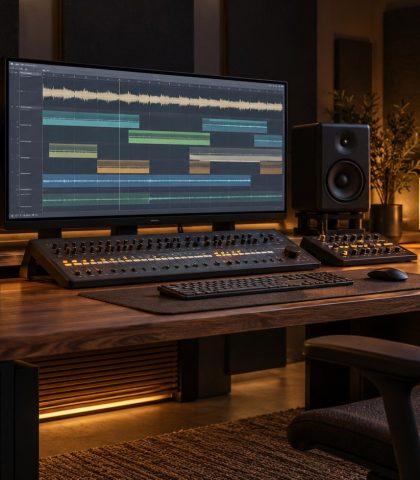
Creating this kind of work demands a serious toolkit. Most professional trailer composers I know build their sessions in Avid Pro Tools, the industry standard for audio post-production. It gives them the flexibility to edit on a micro level, lining up hits to individual frames. For pitch correction and time alignment, Synchro Arts VocAlign is a staple, especially when dialogue or vocal samples need to lock perfectly with music.
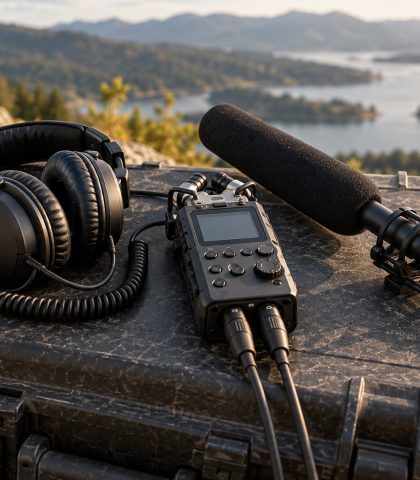
On the sound design side, iZotope RX is indispensable. Whether you are cleaning up a location recording or reducing noise in a sampled string passage, its spectral editing tools save hours. And for final mixing, a system like Dolby Atmos is becoming the norm. Trailers mixed in Atmos give sound designers a wider canvas, placing elements around the audience rather than just in front of them.
Sample libraries also play a huge role. Spitfire Audio makes some of the most expressive orchestral libraries available, with articulations that feel alive. EastWest Hollywood Strings offers a deep, lush string sound that has been a go-to for years. Cinesamples provides excellent solo instruments and percussion that cut through a dense mix. Many composers layer these libraries with synthesizers from Output Arcade to get that hybrid orchestral-electronic sound that defines so many modern trailers.
Voices and Vocals
Not every trailer needs a choir, but when it does, the difference between a generic sample and a custom recorded performance is night and day. I have seen projects where a single vocalist, recorded through a Universal Audio Apollo interface, transformed a track. The warmth and presence of a real voice, captured with quality preamps like those from Apogee Electronics, cannot be faked. Even a simple sustained note, sung with intention, can carry a trailer's emotional weight.
Sound effects are another layer. Libraries like Boom Library and Soundly offer incredible variety, from cinematic impacts to subtle atmospheres. But again, custom work often means recording Foley specifically for the trailer. That might be footsteps on gravel for a western, or the creak of leather for a period drama. These details, when mixed with care, pull the viewer deeper into the world.
Learning the Ropes
How do people get into this specialized field? Many of the composers I know studied at programs like the Los Angeles Recording School, where they learned the fundamentals of recording and mixing. Others came through internships at facilities like Skywalker Sound, absorbing techniques from engineers who have worked on everything from Star Wars to indie films. Hearing stories from those sessions, about how a particular reverb tail or a specific Eventide effect was dialed in, gives you perspective that no tutorial can match.
Mentorship matters in this industry. A seasoned composer can teach you how to read a rough cut, how to negotiate revisions, and how to protect your creative instincts while serving the client. The business side is just as important as the music. Understanding licensing, work-for-hire agreements, and the difference between a sync fee and a royalty can save you from painful lessons down the road.
Finding Your Voice
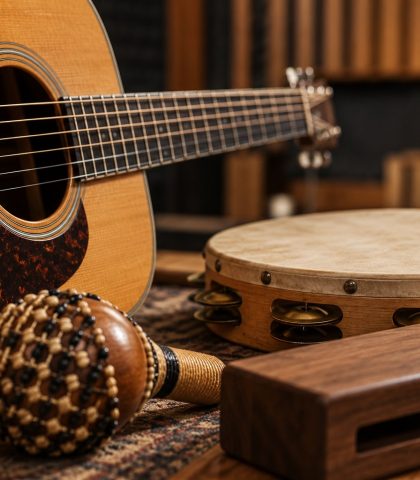
Custom trailer music is a crowded field, but there is always room for a distinctive voice. The composers who stand out are the ones who bring something personal to the table. Maybe it is a fascination with modular synthesis, or a background in jazz harmony, or a knack for combining organic percussion with electronic textures. Whatever it is, lean into it.
Networking also helps. Groups like the Trailer Music Network connect composers with producers and editors who need original work. Building relationships with post-production houses, ad agencies, and even film schools can lead to projects that let you experiment. And platforms like Artlist are making it easier for independent creators to find affordable, high-quality music for their own trailers, though they still lack the specificity of a custom score.
One thing I have learned is that you cannot force inspiration. Some of the best custom trailer music I have heard came from a composer who spent a day just improvising with a cello and a delay pedal. The result was raw, emotional, and perfectly suited to the horror trailer it accompanied. That kind of authenticity resonates with audiences. They may not know why the music feels right, but they feel it.
The Role of the Composer
The composer's job in trailer production is part psychologist, part technician. You have to decode what the director and editor want, sometimes when they themselves are not sure. You have to translate vague terms like "more epic" or "darker" into specific musical choices. And you have to do it fast, because trailer deadlines are brutal.
I have worked on projects where we rewrote a track three times in one day. The first version was too slow. The second was too busy. The third, a combination of a simple piano motif and a swelling string pad, hit the mark. That iterative process, the back and forth between composer and editor, is where custom trailer music truly shines. It is not about getting it right the first time. It is about getting it right by the deadline.
Hans Zimmer once said that the best film music is invisible, meaning it serves the story without drawing attention to itself. The same is true for trailers. The music should amplify the emotion of the images, not compete with them. When it works, the audience leaves the theater buzzing about the movie, not about the score. That is the highest compliment a trailer composer can receive.
Practical Advice
If you are considering a career in this space, start by studying the greats. Listen to how Two Steps From Hell builds energy over a three-minute track. Notice how Audiomachine uses silence. Analyze the way a trailer for a drama uses a solo piano versus the way a blockbuster uses full orchestra. Then, practice. Write a thirty-second piece for a fake movie. Record it, mix it, and show it to people whose opinions you trust.
Invest in your gear, but do not go broke. A Universal Audio Apollo interface and a good pair of monitors will take you far. Add a few choice libraries from Spitfire Audio or Cinesamples, and you have the foundation. Everything else you can learn as you go. The most important asset is your ear and your willingness to revise.
Custom trailer music is not for everyone. The hours are long, the feedback can be harsh, and the work is often anonymous. But for those who love the intersection of storytelling and sound, there is nothing else like it. Every trailer is a new challenge, a new puzzle to solve, a new chance to make someone feel something in thirty seconds.